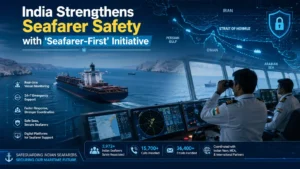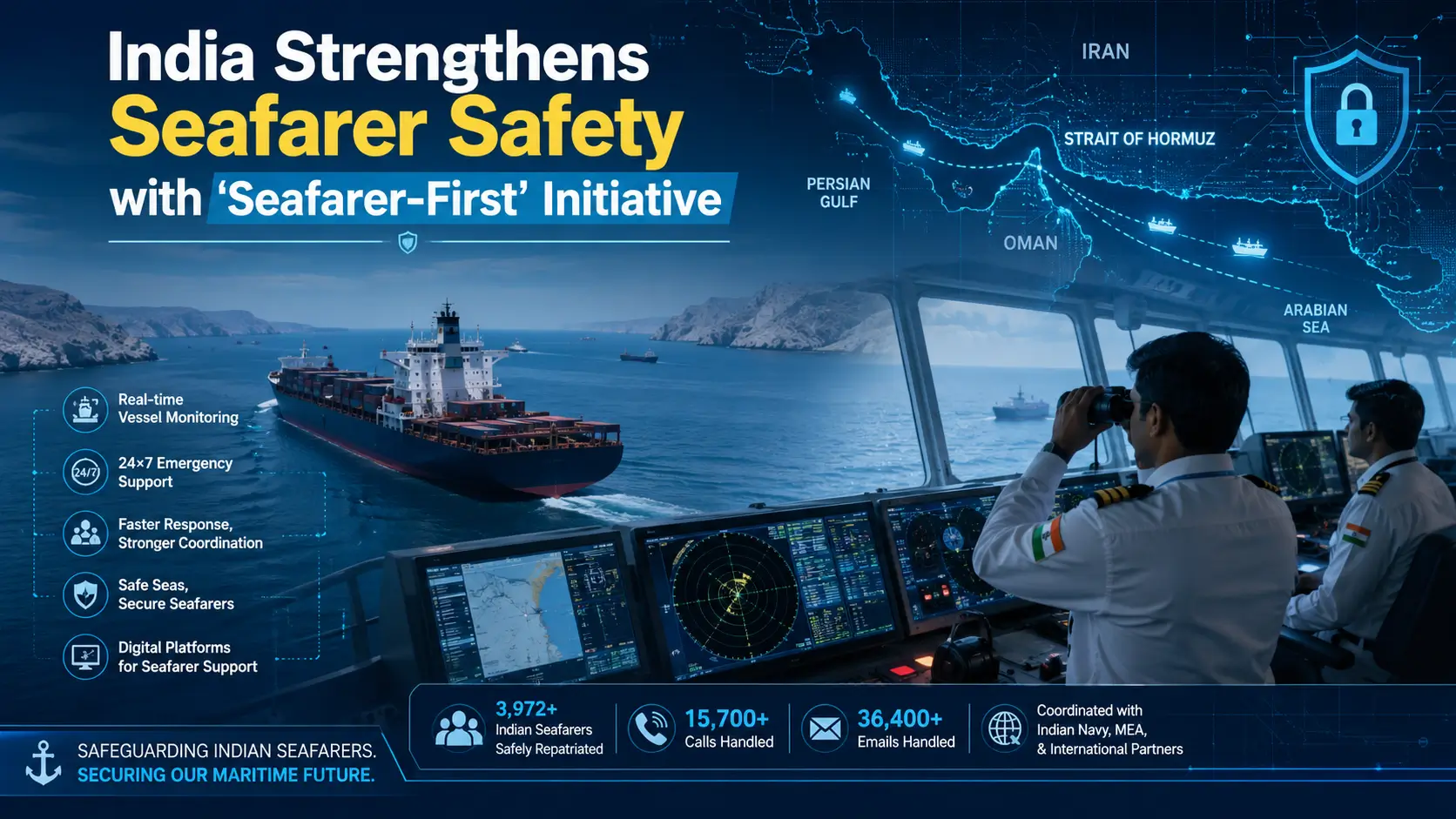
India has taken another significant step towards strengthening Seafarer Safety by introducing a comprehensive ‘Seafarer-First’ initiative aimed at protecting Indian Seafarers operating in high-risk maritime regions. The initiative comes at a time when security concerns in the Strait of Hormuz, the Persian Gulf and nearby waters have increased due to recent attacks on merchant vessels.
Recognising that Indian seafarers form one of the largest maritime workforces in the world, the Government has introduced a coordinated response involving multiple ministries, maritime agencies and digital platforms to ensure that every Indian sailor receives timely support, assistance and protection during emergencies. The initiative reflects India’s commitment to improving Maritime Security while placing the welfare of its seafarers at the centre of national maritime policy.
Why the Initiative Was Needed
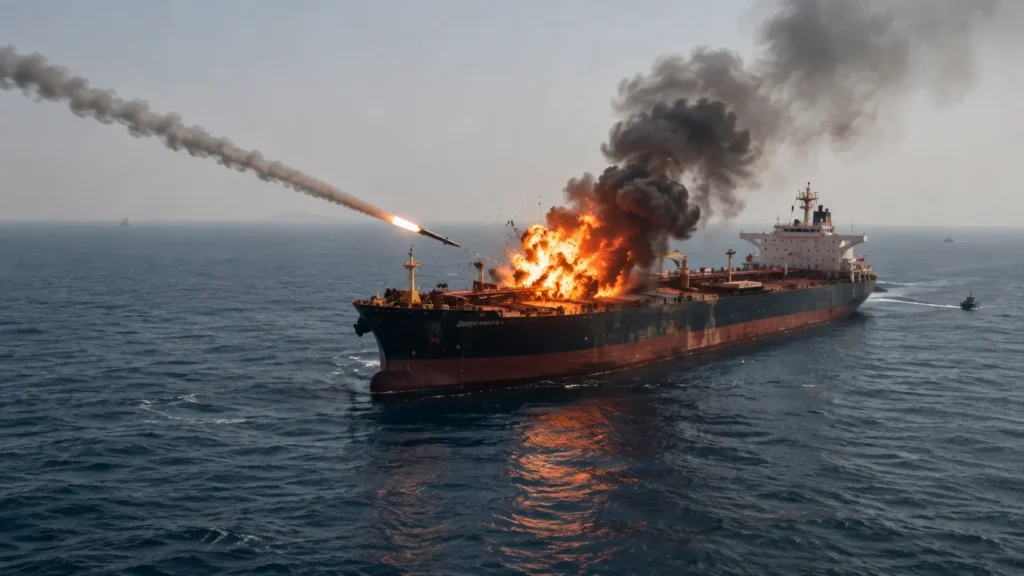
Recent attacks on commercial ships passing through the Strait of Hormuz highlighted the growing risks faced by merchant seafarers. The region is one of the world’s busiest energy and trade corridors, carrying a significant share of global crude oil and cargo traffic. Any disruption affects international shipping and places thousands of seafarers at risk.
In response to these developments, Union Minister for Ports, Shipping and Waterways Sarbananda Sonowal directed authorities to adopt a “Seafarer-First” approach, ensuring that every Indian working onboard ships in conflict-affected waters receives continuous monitoring and support.
The government has stressed that the safety of Indian seafarers remains its highest priority, irrespective of the flag under which the vessel is sailing.
A Whole-of-Government Response
The initiative follows a coordinated approach involving several government departments and maritime organisations.
The Ministry of Ports, Shipping and Waterways is working closely with the Ministry of External Affairs, the Indian Navy, Indian missions abroad, shipping companies and maritime authorities to ensure continuous communication with ships operating in sensitive waters.
One of the key decisions is the appointment of dedicated liaison officers for affected Indian seafarers. These officers act as direct points of contact for seafarers and their families, helping coordinate assistance whenever required.
Authorities have also ordered vessel-by-vessel monitoring, allowing officials to track every Indian seafarer individually rather than relying only on vessel reports. This provides faster response during emergencies and improves coordination between government agencies.
DGMA Leads Digital Maritime Support
The Directorate General of Maritime Administration (DGMA) plays a central role in implementing the initiative.
A major feature is the use of digital platforms to improve communication and emergency response. Through the eNavik system, seafarers can report incidents, submit grievances and seek assistance without lengthy paperwork.
The platform enables authorities to receive reports quickly, monitor developments in real time and coordinate with relevant agencies for faster action.
A dedicated 24×7 control room has also been activated, ensuring that Indian seafarers and their families have continuous access to assistance through telephone, email and WhatsApp support. This round-the-clock communication system helps reduce uncertainty during crises and provides reassurance to families back home.
Strong Response During Recent Maritime Crisis
Government officials highlighted the scale of assistance already provided during recent geopolitical tensions.
According to official figures, authorities monitored thousands of vessel movements and maintained continuous communication with Indian crew members operating in sensitive maritime zones.
The control room handled more than 15,700 phone calls and over 36,400 email communications, demonstrating the extensive coordination required during the crisis.
The government also facilitated the safe repatriation of 3,972 Indian seafarers stranded because of security concerns. Additionally, around 60 merchant vessels carrying cargo for India safely transited through the Strait of Hormuz under continuous monitoring and coordination.
These efforts involved cooperation between the DGMA, the Ministry of External Affairs, the Indian Navy, shipping companies and Indian diplomatic missions overseas.
Risk-Based Maritime Security
Rather than applying the same measures everywhere, the government has adopted a risk-based approach.
Shipping routes are continuously assessed based on the prevailing security situation. Where necessary, advisories are issued to shipping companies, and additional precautions are recommended before vessels enter high-risk waters.
The government has also emphasised regular communication with shipowners, operators and recruitment agencies to ensure that seafarers remain informed about changing security conditions.
This approach allows authorities to respond quickly while minimising disruptions to global shipping operations.
Focus on Seafarer Welfare
Beyond operational safety, the initiative also focuses on the welfare of Indian Seafarers and their families.
The government has reiterated its commitment to providing timely assistance during emergencies and extending welfare support whenever required. Financial assistance of ₹10 lakh is available to families in the unfortunate event of a seafarer’s death while serving onboard.
Officials also continue to coordinate with shipping companies to ensure that seafarers receive appropriate support during periods of heightened geopolitical tension.
The emphasis is not only on responding to emergencies but also on building confidence among Indian seafarers who continue to work in some of the world’s busiest and most strategically important shipping routes.
Also read: India Launches E-Samudra to Transform Maritime Governance and Strengthen Seafarer Welfare
What This Means for India’s Maritime Sector
India is among the world’s leading suppliers of merchant seafarers, making their safety critical not only for the country but also for global shipping.
The Seafarer-First initiative demonstrates a shift towards proactive maritime governance where technology, inter-agency coordination and welfare measures work together to protect seafarers.
By combining digital monitoring, dedicated emergency support, international coordination and welfare assistance, the government aims to build a safer and more resilient maritime ecosystem.
As geopolitical tensions continue to affect global shipping, such initiatives will play an increasingly important role in protecting lives, maintaining uninterrupted trade and reinforcing India’s reputation as a responsible maritime nation.
Conclusion
The launch of the Seafarer-First initiative marks an important milestone in India’s maritime safety framework. Through stronger Maritime Security, real-time monitoring, digital support systems and dedicated welfare measures, the government has reinforced its commitment to safeguarding Indian Seafarers working across challenging international waters.
For thousands of Indian maritime professionals serving aboard merchant vessels worldwide, this initiative provides greater confidence that help will be available whenever it is needed most.
Source: Press Information Bureau (PIB)